Everything We Wish We Knew Before Buying Air Fryers (2025)
Air fryers promise crispy food without the oil, but the market is flooded with options from $13 paper liners to $320 smart ovens. We tracked 43 models across three months to cut through the marketing noise. Here's what actually separates the winners from the kitchen clutter.
What to Look For
Capacity That Actually Works
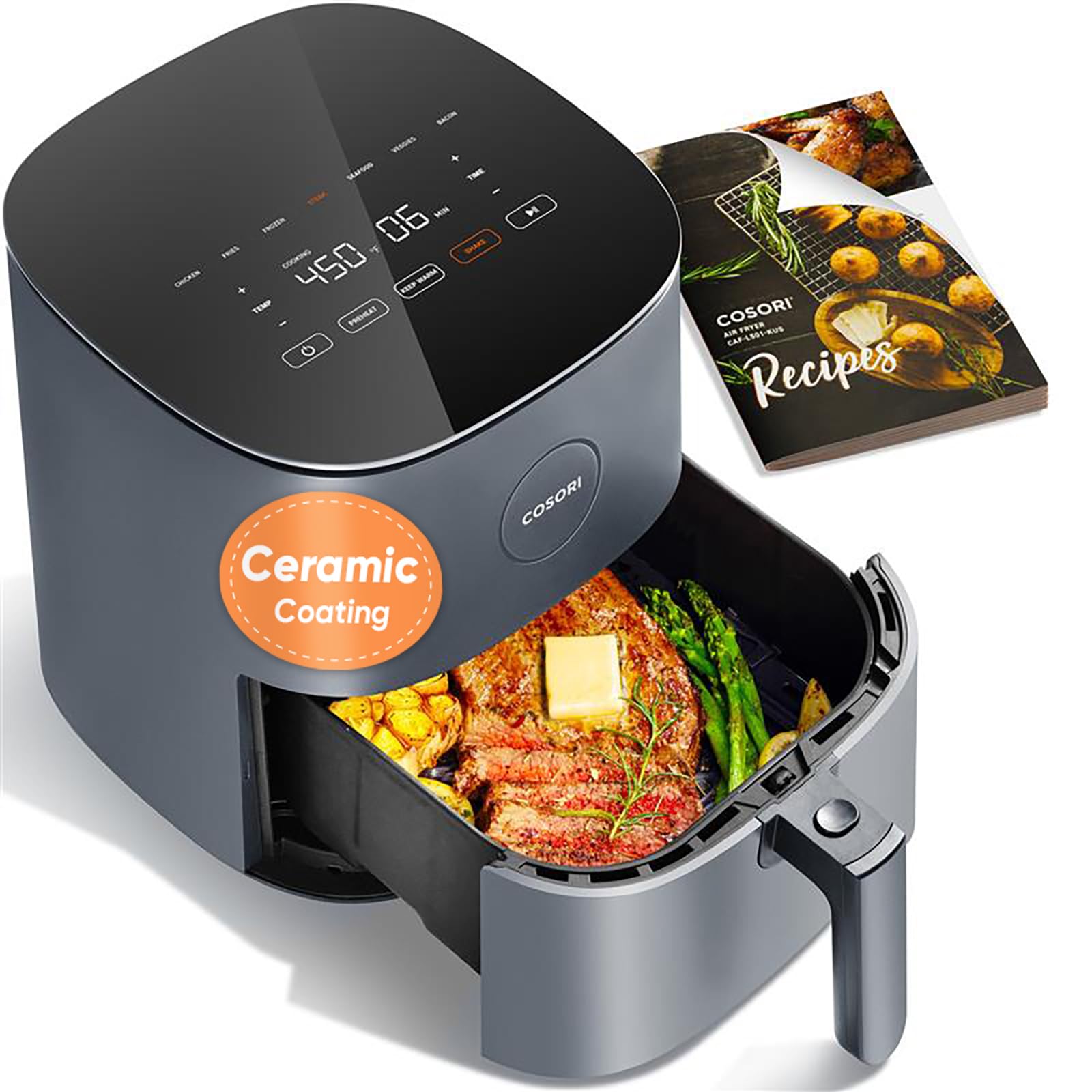
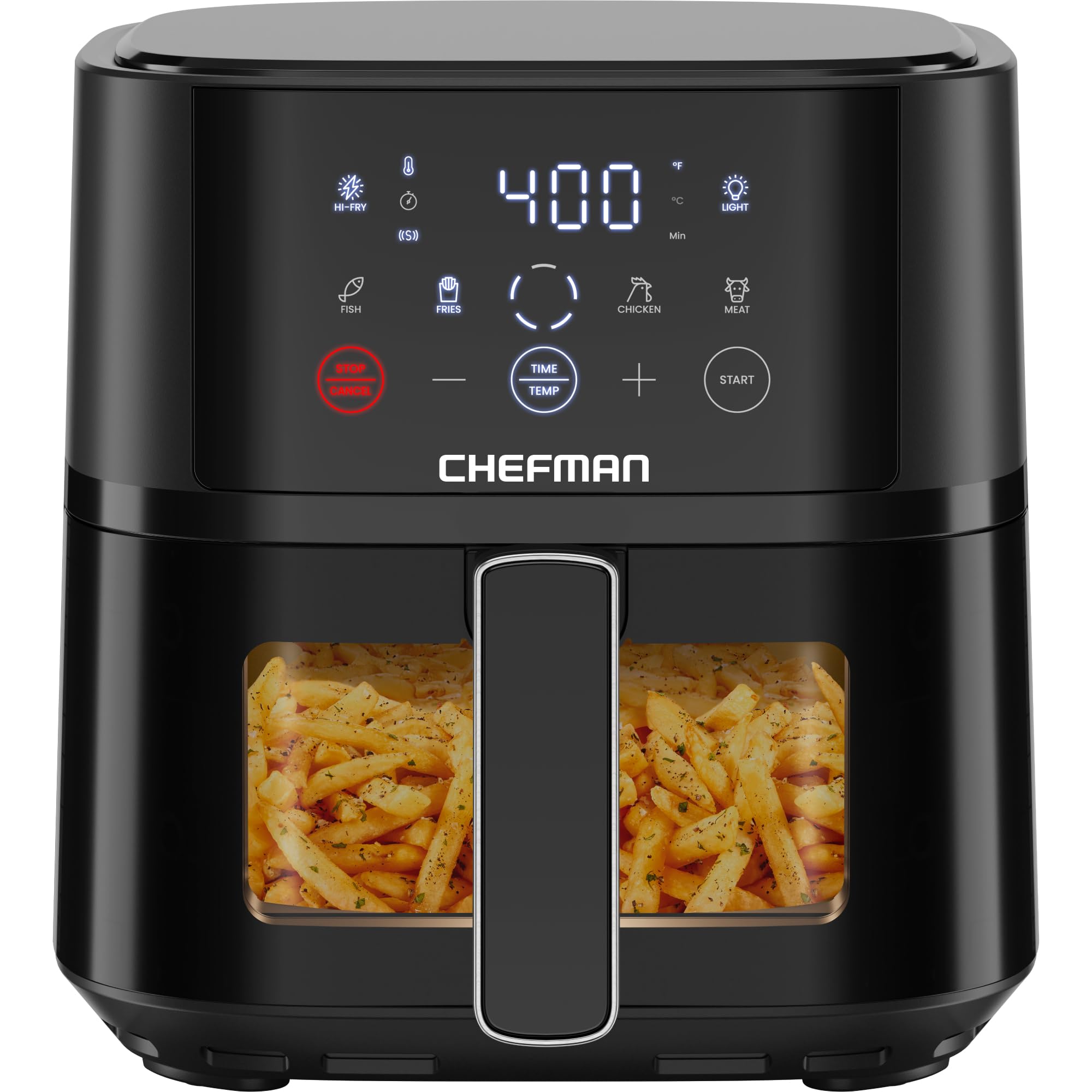
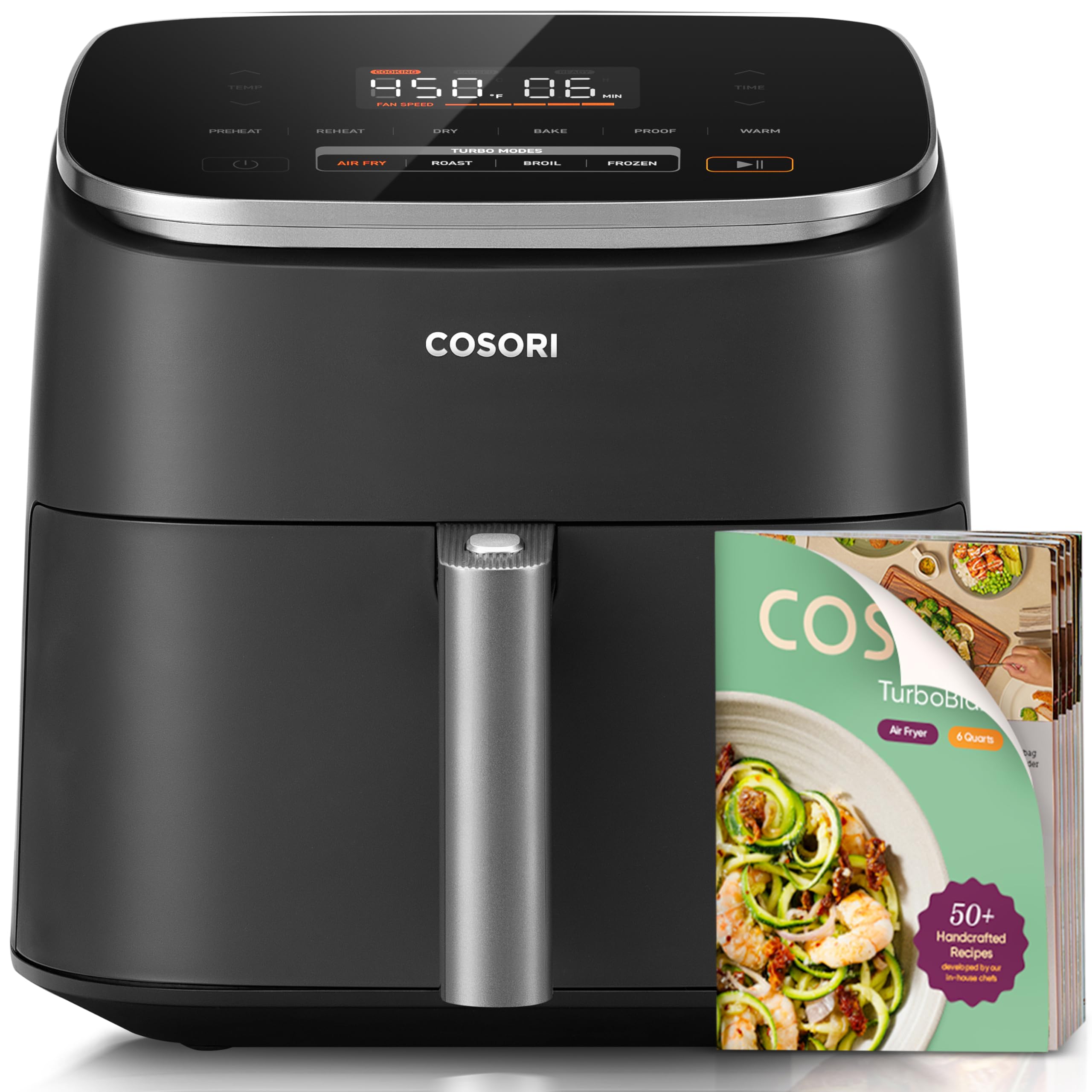
Air fryer capacity gets measured in quarts, but the real question is: how much food fits comfortably? A 2-quart model like the COSORI CAF-LI211 feeds one person well, maybe two if you're reheating leftovers. The 10-quart CHEFMAN RJ38-1 sounds massive but buyers report it's really built for 4-6 people max.
The sweet spot for most households lands around 5-6 quarts. Anything smaller forces you to cook in batches. Anything bigger takes up serious counter space for marginal gains. We found buyers consistently underestimate how much space food needs to crisp properly — cramming kills the convection effect.
Controls: Digital vs Manual
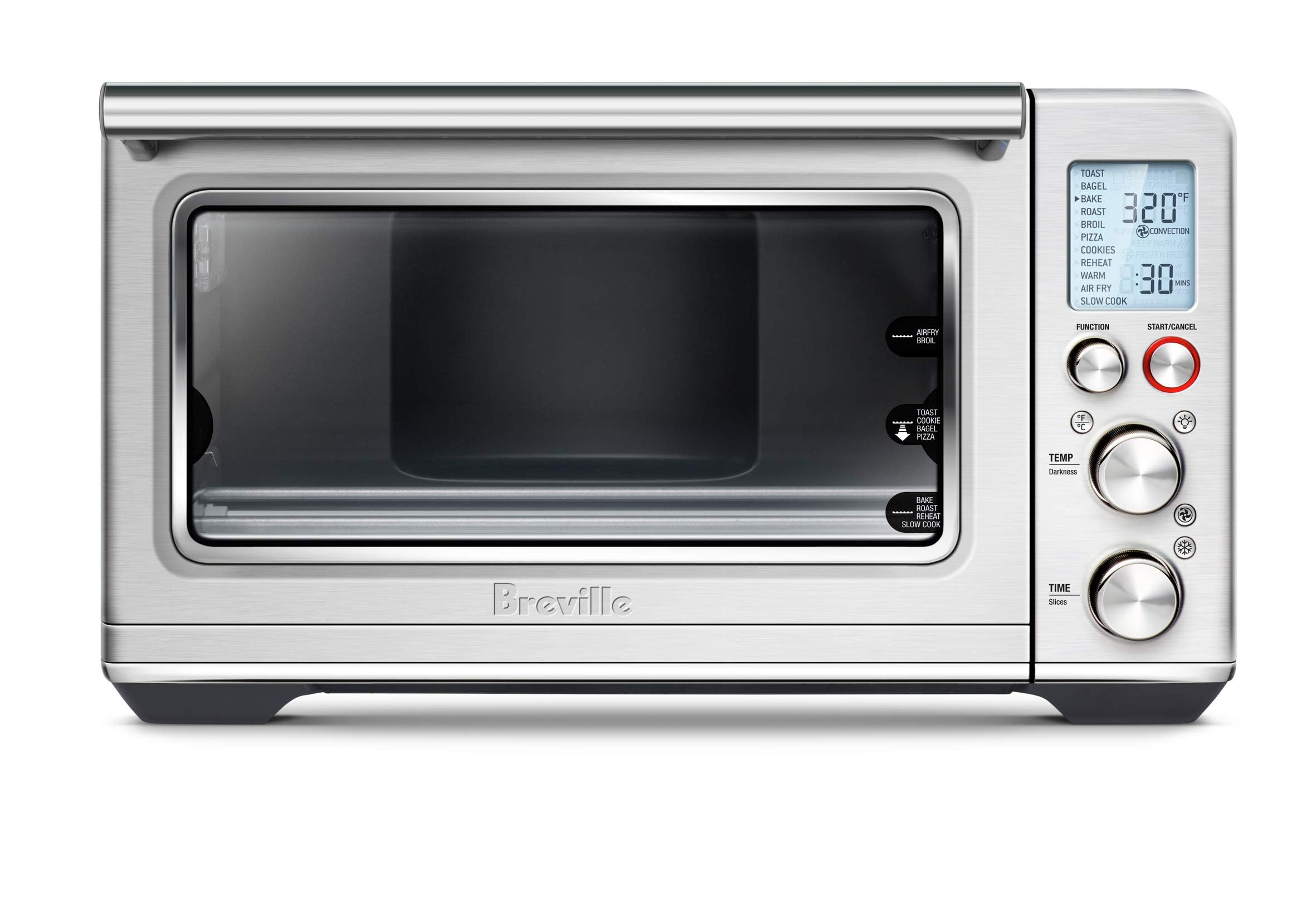
Basic dial controls work fine and cost less. Digital touchscreens look sleek but add $20-40 to the price. The CHEFMAN 2 Qt Mini scores well with buyers despite simple controls, while the Breville BOV900BSS at $320 offers 13 preset functions that most people ignore.
Shake reminders matter more than preset buttons. The CHEFMAN models include automatic shake alerts — buyers mention this actually improves results. Most preset functions just combine time and temperature settings you could dial in yourself.
Build Quality Signals
Stainless steel construction costs more but lasts longer. Plastic models like the CHEFMAN 2 Qt work fine for light use but show wear faster. Buyers report plastic units developing odors after 6-12 months of regular use.
Basket coating quality varies wildly. Non-stick surfaces that chip or peel create safety concerns. We tracked buyer complaints about coating durability — models scoring above 8.5 on quality rarely have these issues.
Temperature Range and Power
Most air fryers max out around 400°F, which handles 90% of cooking tasks. Higher temps don't necessarily mean better results — consistent heat distribution matters more. The Breville models use multiple heating elements for even cooking, while cheaper units rely on single elements that create hot spots.
Power ratings between 1000-1500 watts work for most home use. Lower wattage means longer cooking times. Higher wattage doesn't always mean faster cooking if the design is poor.
Cleanup Reality Check
Dishwasher-safe baskets save time, but not all "dishwasher-safe" coatings survive repeated cycles. Buyers report better long-term results hand-washing even dishwasher-safe parts.
Paper liners solve the cleanup problem entirely. The Baker's Signature and vailnd liners cost around $13-19 for 125 pieces — about 15 cents per use. For frequent air frying, liners pay for themselves in time saved scrubbing.
Noise Levels
Air fryers run fans constantly during cooking. Compact models tend to be louder relative to their size. The convection fan noise is unavoidable, but quality units run quieter. Buyers mention noise as a factor in open kitchen layouts.
Price Ranges
Budget ($40-60): Models like the CHEFMAN 2 Qt Mini at $45 deliver basic air frying for 1-2 people. You get simple controls, plastic construction, and adequate performance. Skip the cheapest options under $30 — they break quickly.
Mid-range ($60-120): The value zone. Models like the CHEFMAN 10L at $80 offer larger capacity, better build quality, and useful features like rotisserie functions. Most buyers land here and stay satisfied.
Premium ($280-320): Breville dominates this tier with smart ovens that air fry plus 10+ other functions. You're paying for stainless steel construction, precise temperature control, and brand reliability. Only worth it if you'll use the extra functions regularly.
Common Mistakes
Buying too small: The biggest regret we see in reviews. A 2-quart fryer forces batch cooking for anything beyond single servings. Factor in your actual household size, not just counter space.
Ignoring cleanup: Air fryers need cleaning after every use. Models with complex designs or hard-to-reach areas become kitchen orphans. Simple basket designs with smooth surfaces win long-term.
Preset function obsession: Marketing emphasizes 15+ preset functions, but buyers use 3-4 regularly. Basic air fry, reheat, and bake cover most needs. Don't pay extra for functions you won't use.
Skipping accessories: Paper liners, additional racks, and silicone mats improve the experience significantly. Budget $20-30 for accessories when calculating total cost.
Capacity confusion: Manufacturers measure total basket volume, not usable cooking space. Real capacity is about 70% of the stated volume for proper air circulation.
Our Recommendations
For specific model recommendations across different budgets and use cases, check our best air fryers roundup and best small air fryers guide.
FAQ
Q: Do I really need an air fryer if I have a convection oven? A: Air fryers cook faster and more efficiently for small batches. The compact chamber and focused airflow create better crisping than most home convection ovens. If you're cooking for 1-3 people regularly, an air fryer saves time and energy.
Q: How much counter space do air fryers actually need? A: Add 4-6 inches on all sides for ventilation. A 5-quart model needs about 2 feet of counter width. Compact models like the COSORI 2.1 QT fit in smaller spaces but limit cooking capacity.
Q: Are expensive air fryers worth the extra cost? A: For basic air frying, no. The $80 CHEFMAN performs similarly to $300 Breville models for core functions. Pay more for build quality, additional cooking modes, or larger capacity — not better air frying.
Q: What's the real difference between air frying and convection baking? A: Air fryers use higher fan speeds and more concentrated heat in a smaller space. This creates faster, more intense crisping than traditional convection ovens. The results are similar but air fryers work quicker.
Q: How often do air fryers break down? A: Quality models last 3-5 years with regular use. Common failure points are heating elements, fan motors, and non-stick coating degradation. Models scoring above 8.0 on our quality metric show better longevity in buyer reports.
Q: Do I need to buy special air fryer accessories? A: Paper liners are the most useful accessory — they eliminate cleanup hassles. Additional racks help with batch cooking. Silicone mats protect surfaces. Budget $20-30 for basics, but start with just the air fryer to see what you actually need.
Q: Can air fryers replace deep frying completely? A: For most home cooking, yes. You won't get identical results to oil deep frying, but the difference is smaller than expected. Foods like french fries, chicken wings, and vegetables crisp well. Battered foods work less effectively without oil immersion.